
By Naomi Moss | Team GWG Ambassador
Semi-automatic or Revolver?
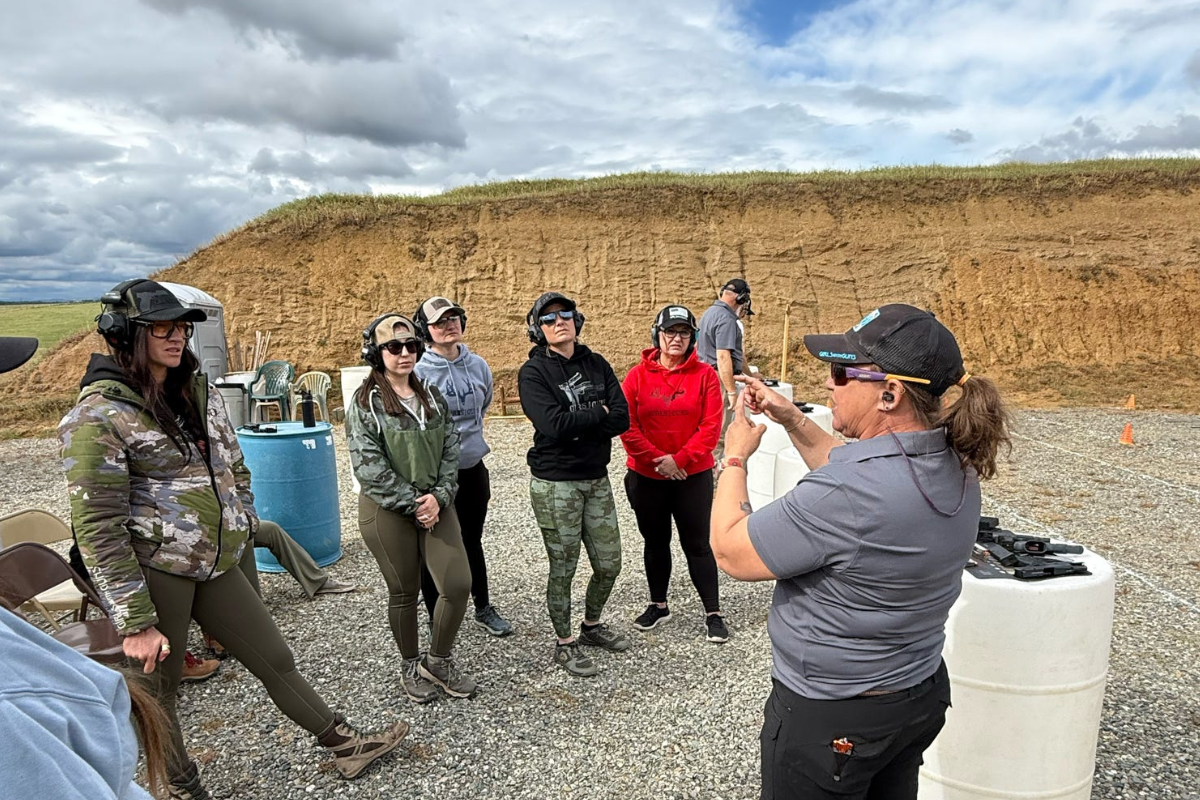
I have been a firearms instructor for over 14 years. One of my favorite parts of instructing is I get to see a multitude of guns in classes. And along with a multitude of guns, comes a multitude of questions, which I absolutely encourage. Since I’ve seen every gun imaginable in my classes from 2 shot derringers to Desert Eagles, one question pops up in almost every class:
“Which is better, revolver or semi-auto?”
My favorite answer, “It depends.”
It depends on purpose. What are you going to use the gun for? The gun you use in general target practice might be different from one used in competition or hunting. You wouldn’t wear dress shoes for a marathon. Handguns are similar. What works great in one situation may not be the best choice for another.
Revolvers
Simple, Reliable and Concealable
One of the biggest advantages of a revolver is its straightforward design. There are no magazines to load, no slides to rack, and no external safeties on most models. To use the firearm, the shooter simply loads the cylinder, closes it, and pulls the trigger.
The simple design makes most revolvers very reliable. Because they do not depend on recoil energy to cycle the action, they are less sensitive to ammunition variations and shooter technique. In other words, they tend to malfunction less than semi-autos.
If a cartridge fails to fire, the shooter can simply pull the trigger again to rotate the next round into position. Some people say, “Revolvers don’t jam!” However, I have seen a revolver lock up and the cylinder would not budge. Never, say never.
Revolvers can safely fire a wide range of ammunition loads within their chambering. For example, a .357 Magnum revolver can also shoot .38 Special ammunition, allowing shooters to choose between lower recoil practice loads and more powerful defensive rounds. This versatility is particularly attractive for recreational shooters and hunters. The smaller revolvers, like a Ruger LCR, will fit perfectly in the Defender Leggings.
For hunting and some personal protection environments like hiking in bear country, revolvers are often chambered in powerful calibers that would be difficult to cycle in a semi-automatic platform such as .44 Magnum, .454 Casull, and .500 S&W. Sometimes you want a little extra power when facing large animals.
Revolvers Aren’t Perfect
One of the most significant drawbacks of a revolver is ammunition capacity. Most defensive revolvers hold only five or six rounds. When your life is on the line with multiple attackers, you might want the larger capacity of a semi-automatic.
Reloading each chamber can be time consuming. Even with speed loaders or moon clips, reloading a revolver is generally slower than swapping magazines in a semi-auto.
Double-action (DA) revolvers typically have longer and heavier trigger pulls compared to striker-fired or single-action (SA) semi-automatic pistols. This can make accurate shooting more difficult, especially for those with hand issues, like arthritis or limited mobility in hands and/or fingers.
Recoil on smaller revolvers, especially those made with lighter components, can be more noticeable and even make the gun harder to manage than a semi-automatic with the same barrel length. You might be able to conceal it well, but shooting accurately with a smaller gun can be harder than you think.
Semi-Automatic Pistols
The Modern Standard
One of the advantages of semi-automatic pistols is magazine capacity. This increased capacity provides shooters with more ammunition before needing to reload and can be a significant advantage in defensive scenarios. I would much rather have 15 rounds than 6 before I need to reload. Even subcompact semi-autos can have 8 rounds or more. Jogging with 8-10 rounds vs 5-6 is a little more appealing and will fit in the Defender Leggings as well.
Carrying spare magazines is also quite convenient. I can stow one in a pocket or a magazine pouch on my belt and be ready to go. Reloads are generally quick and efficient. A little training and practice can decrease reloads to under 2 seconds easily.
Triggers! Most semi-automatic pistols have a consistent trigger pull that are lighter and shorter than traditional double-action revolvers. This often translates into improved accuracy and faster follow-up shots.

Semi-automatic pistols typically have a flatter design than revolvers, making them easier to conceal under clothing. Their slim profile has contributed significantly to their popularity among concealed carry permit holders.
Gadgets! Semi-autos can have accessory rails, optics-ready slides, interchangeable backstraps, and aftermarket support. Shooters can customize their firearms with weapon-mounted lights, red dot sights, upgraded triggers, and other accessories.
This flexibility allows users to tailor the pistol to their specific needs.
Still Not Perfect
Malfunctions. Although modern pistols are extremely reliable, they are still mechanical systems that can experience failures to feed, failures to eject, or other stoppages. Poor maintenance, defective ammunition, or improper grip technique can contribute to malfunctions.
But don’t let the potential of malfunctions scare you. With training and practice, clearing malfunctions becomes a nonissue. However, when a revolver malfunctions it can be easy (pull the trigger again) or catastrophic (can make the cylinder unmovable and must unscrew it to get it to open/move).
More moving parts = More cleaning and lubricant. While maintenance is straightforward, neglect can affect reliability over time. Taking a slide off a frame can be a little more intimidating than just opening the cylinder to clean/lube a gun. But with a little practice, it’s not a big deal.
Which Is Better?
You must decide. What is your purpose? Do you want smaller reliable but lesser ammunition capacity? Do you want an easier trigger press and less recoil? Need something small and lightweight and can handle the recoil?
No matter which action you choose, malfunctions are bad with any pistol. Learn to clear them quickly, no matter the gun. Test your chosen defensive ammunition in your pistol to ensure reliability, no matter the gun.
Both revolvers and semi-automatic pistols can be effective, reliable tools when matched appropriately to the user's intended purpose and skill level. The best handgun is the one you can operate safely, shoot accurately and train with consistently. Whether that firearm has a rotating cylinder or a detachable magazine matter far less than the proficiency of the person holding it.
Pick your gun and learn to shoot it well. Your life may depend on it.
0 comments